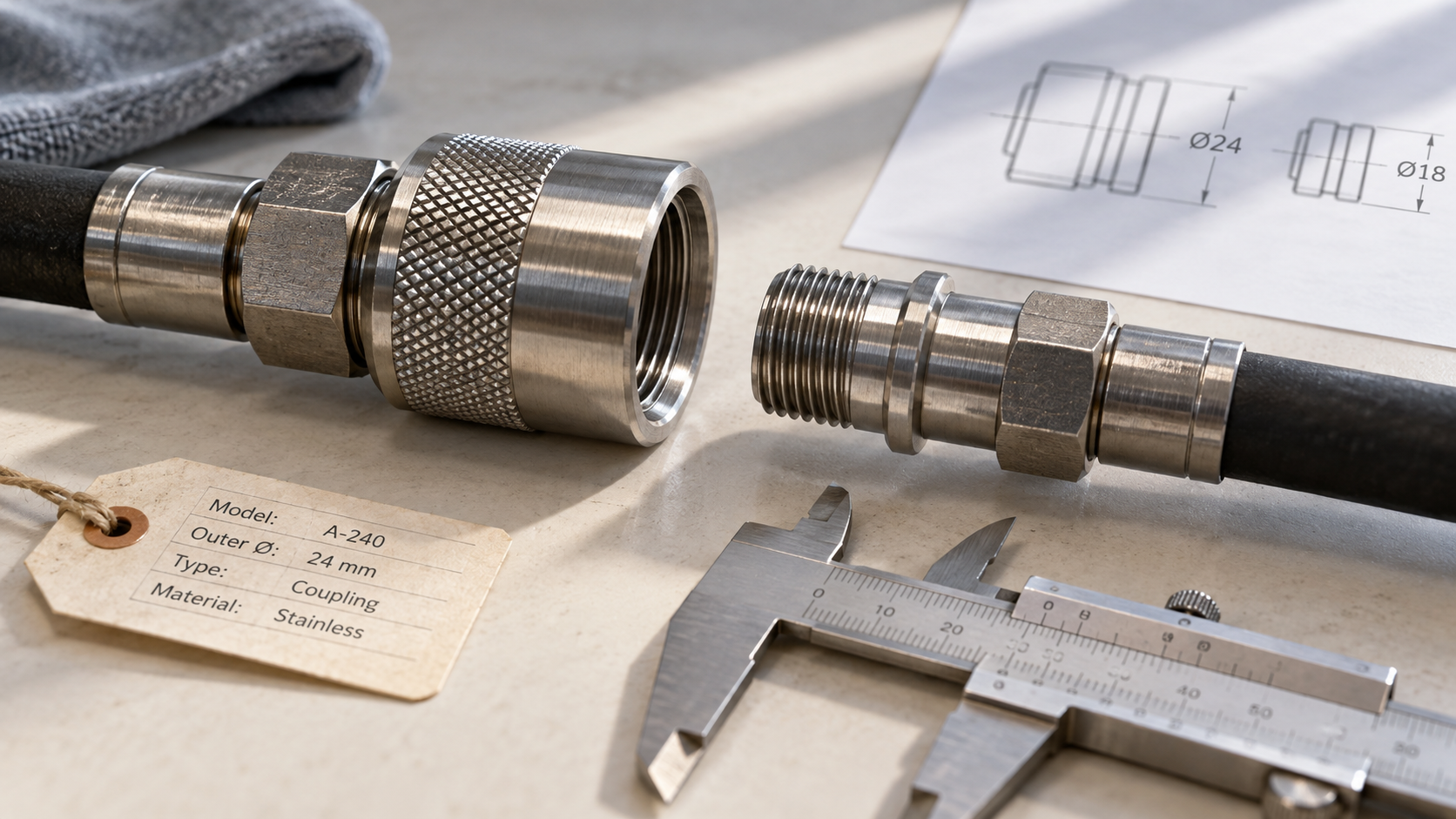
“Will this fit?” sounds like a simple product question until the answer depends on a model, a measurement and a detail the customer has not thought to mention. Accessory searches often arrive with exactly that uncertainty.
An advertisement can promise relevance by naming the application. The destination then needs to explain the conditions under which the promise holds. Otherwise the customer is left choosing between an assumption and a conversation with no clear starting point.
Distinguish a name from a match
A familiar product name may identify a family rather than a single configuration. The relevant difference could be a year, a connector, a dimension or a revision. Put that distinction where somebody checking compatibility is likely to look.
If there is a dependable identifier, explain how to locate it. A short labelled illustration or a description of the marking can be more helpful than a list of codes without guidance. The goal is to let the customer supply the right fact, not merely expose more facts on the page.
Show the condition beside the answer
A compatibility statement should carry its important qualifications with it. If an accessory requires an additional fitting, the reader should see that before treating the answer as complete. If a product is unsuitable for a particular variant, make the exclusion understandable.
This is a writing problem as well as an information problem. “Compatible with selected models” is technically cautious but leaves the selection unexplained. A useful statement makes the rule clear enough for the customer to apply or tells them exactly what needs checking.
Design an uncertainty route
Some visitors will not have the information needed to decide. Give them an enquiry route that acknowledges that situation. Ask for the details a colleague can use, and make it possible to indicate that a particular value is unknown.
Forcing an uncertain customer to select a model from an unfamiliar list can create a confident-looking but inaccurate request. An open explanation, supported by a photograph or a measurement where appropriate, may produce a better conversation.
Feed the questions back into the page
Repeated compatibility enquiries are useful editorial evidence. They may reveal that an identifier is difficult to find, a condition is buried or an explanation uses unfamiliar language.
Review those questions before adding another broad reassurance to the advertisement. The campaign can bring the right people to the page. The page must then give them an honest way to establish whether the product fits their particular situation.

A thought worth keeping?